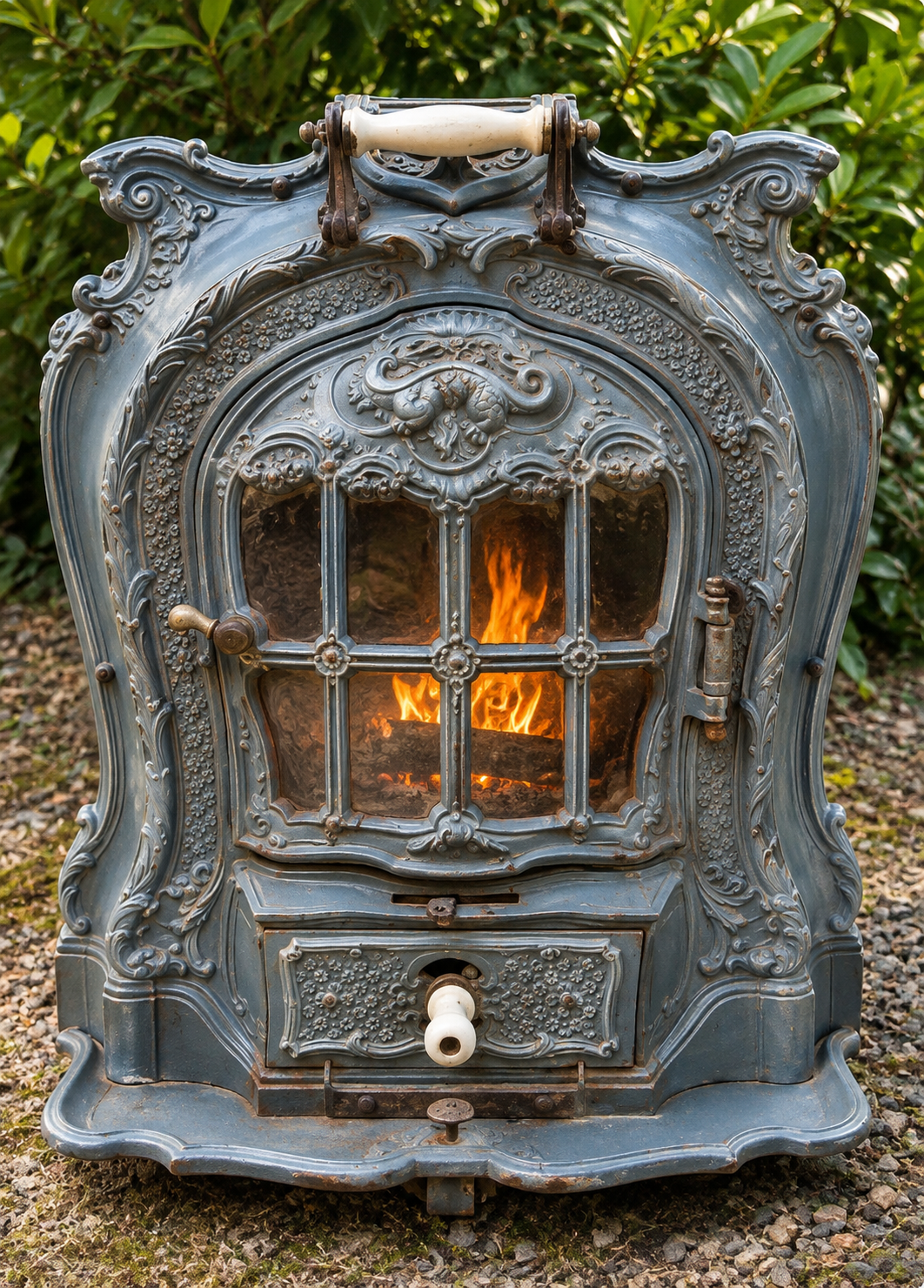
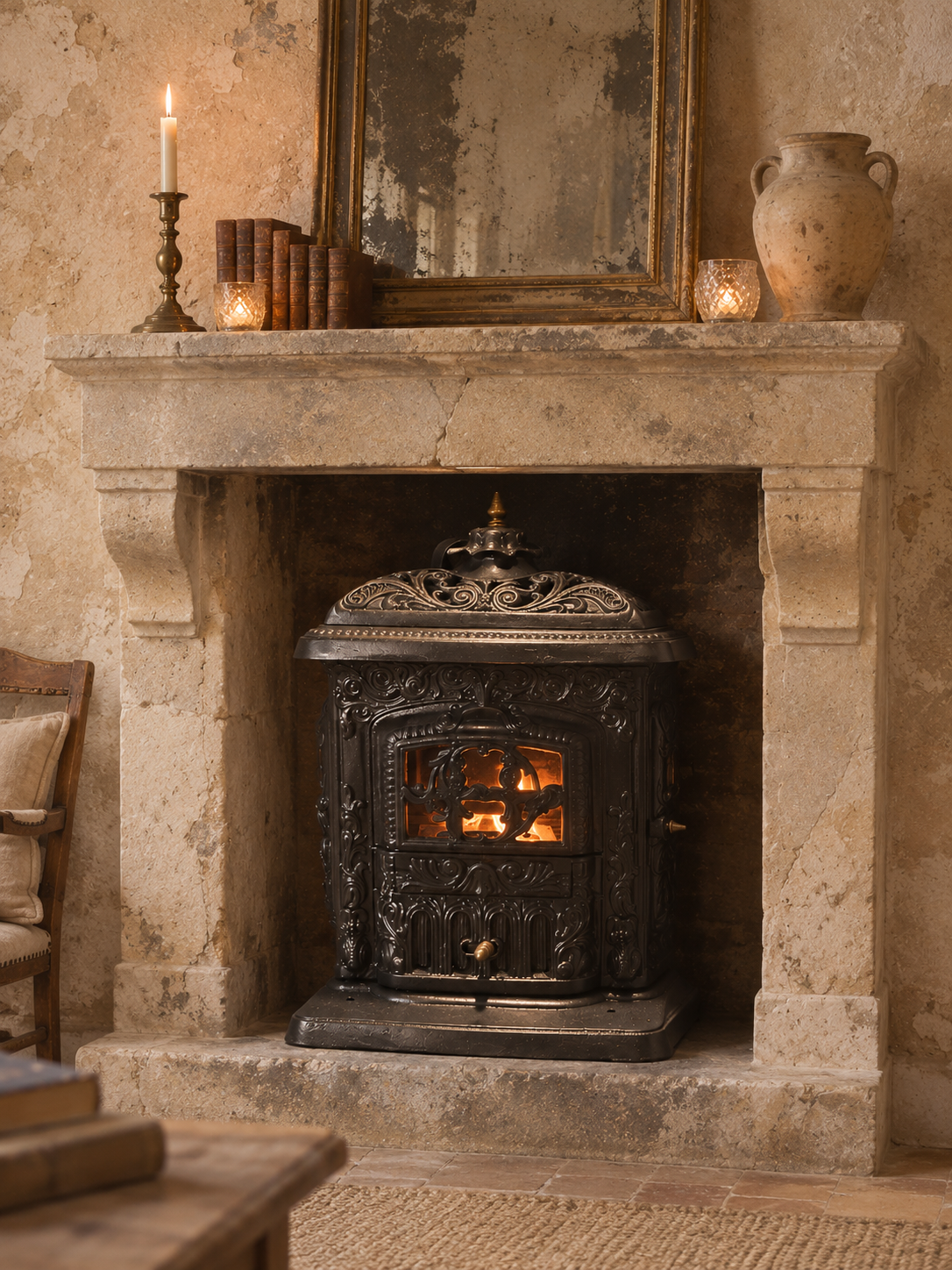
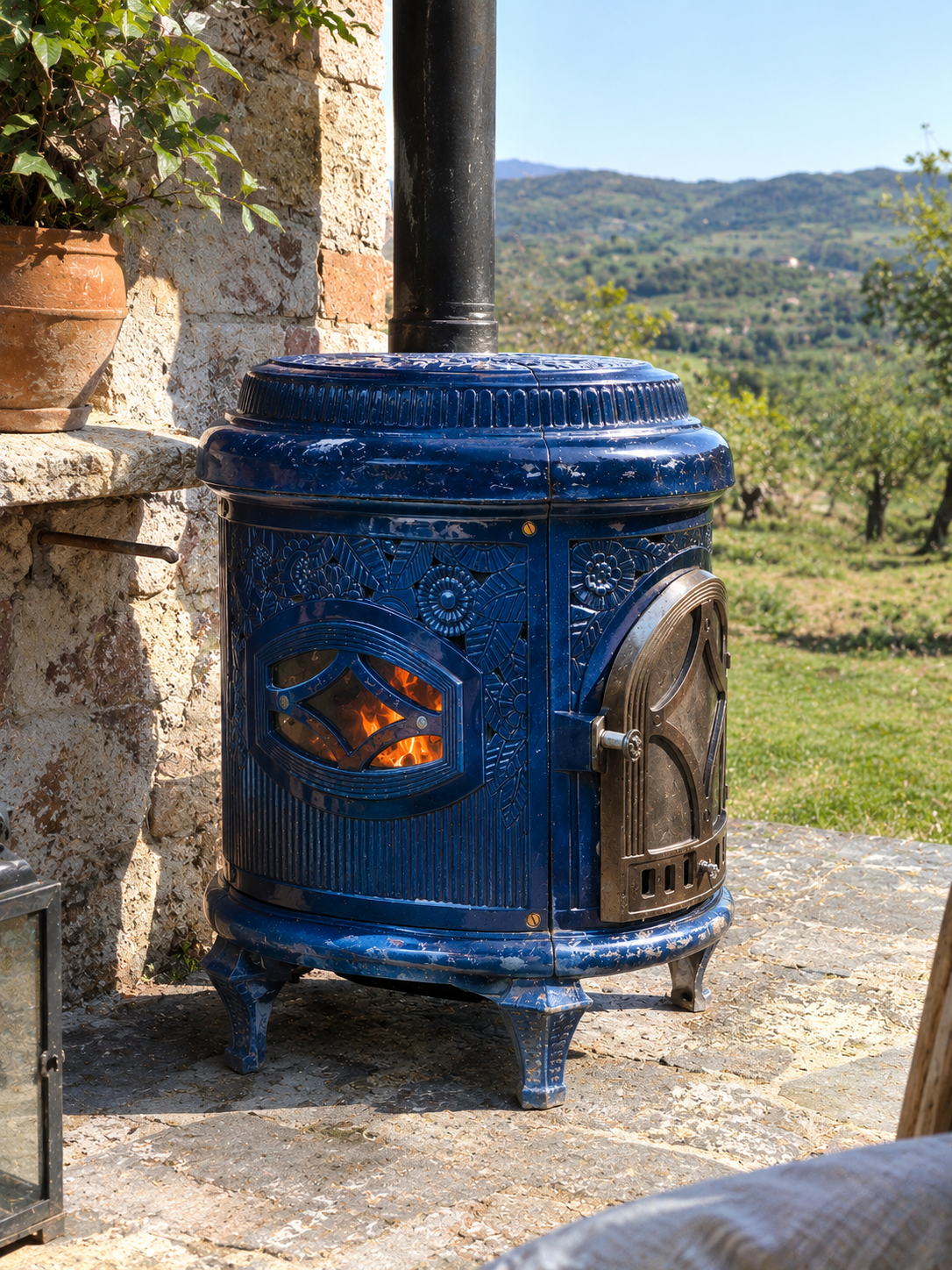
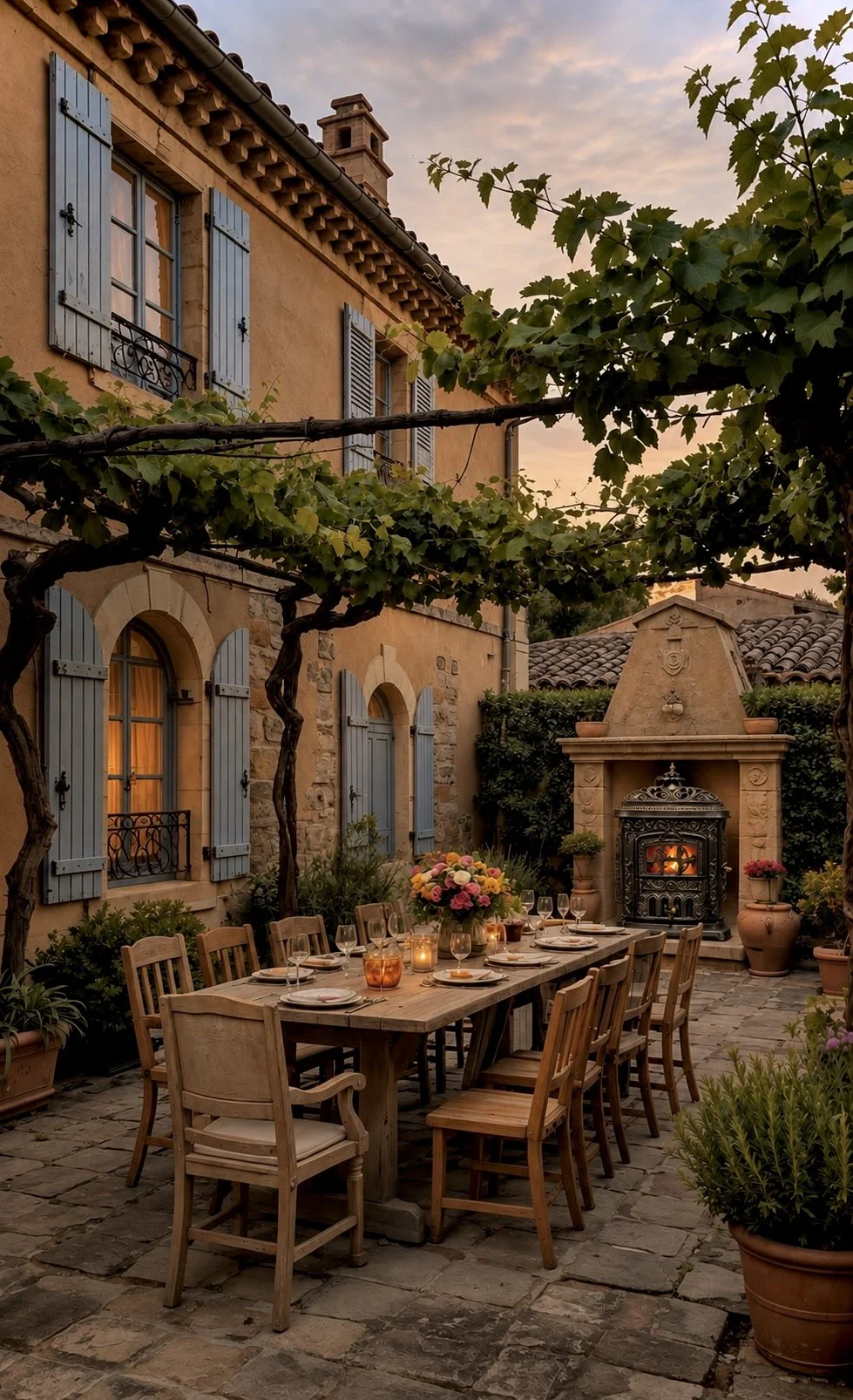
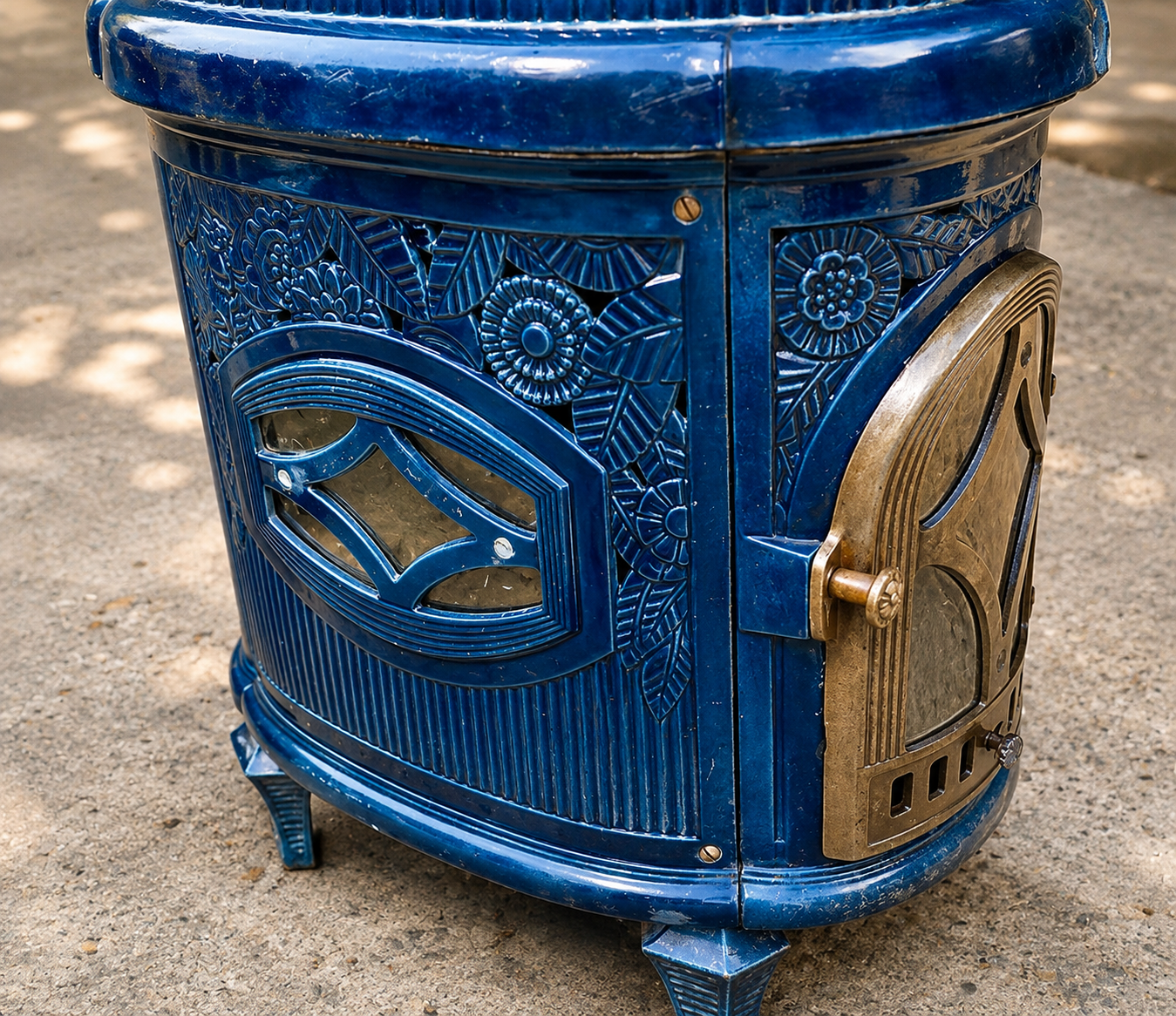
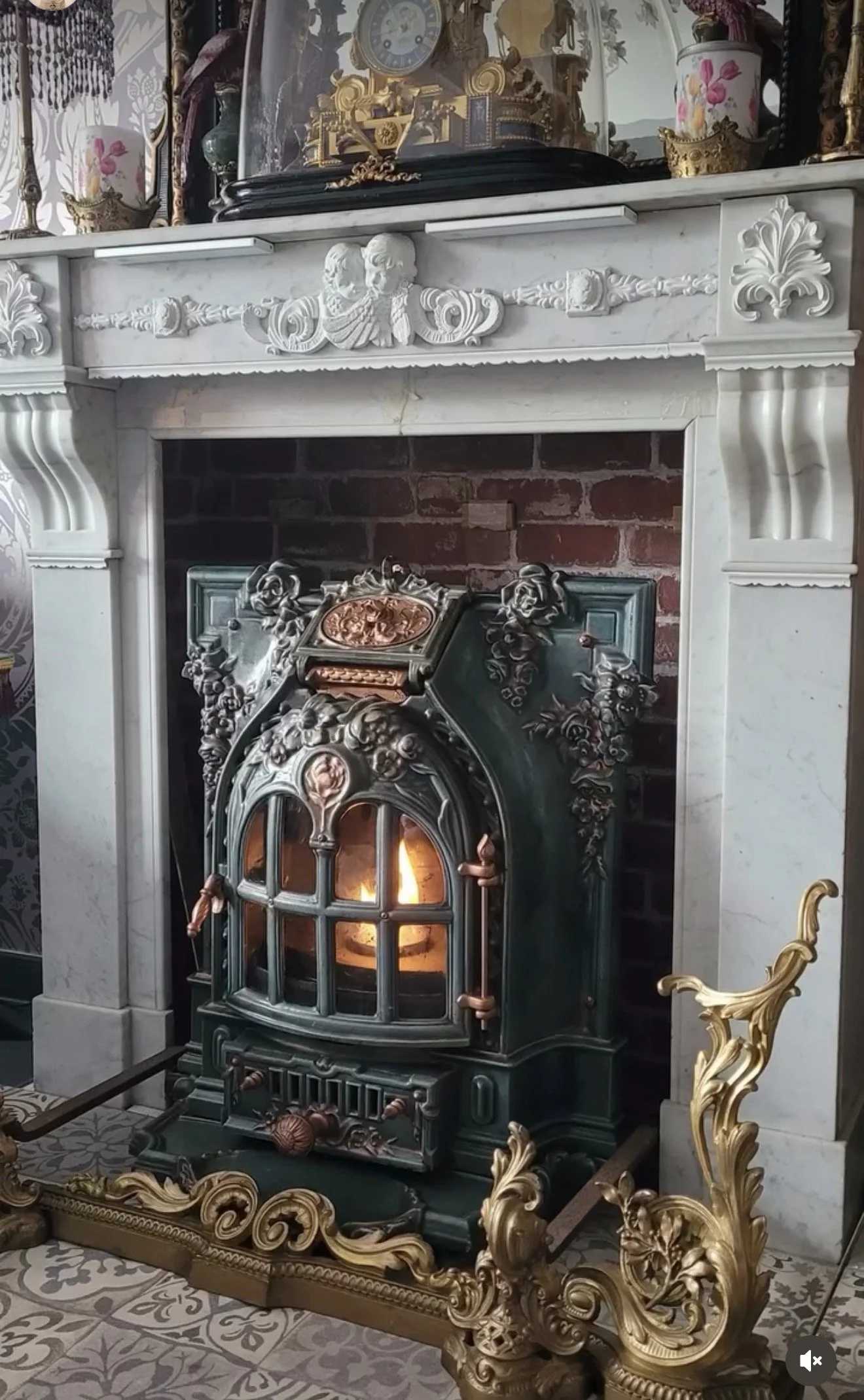
Deep in the French countryside, two artisans are giving century-old treasures a remarkable second life. Meet Louise and Philippe, the couple behind Flamantique, whose passion for French antiques, traditional craftsmanship, and the warmth of a real fire has become a rather extraordinary restoration story.
A Little History, and a Second Chance
There is something wonderfully romantic about the French countryside. Perhaps it's the centuries-old stone houses, the little villages that seem entirely unbothered by the passage of time, or the extraordinary objects that have quietly survived generations of changing tastes.
Of course, not every treasure survives in plain sight.
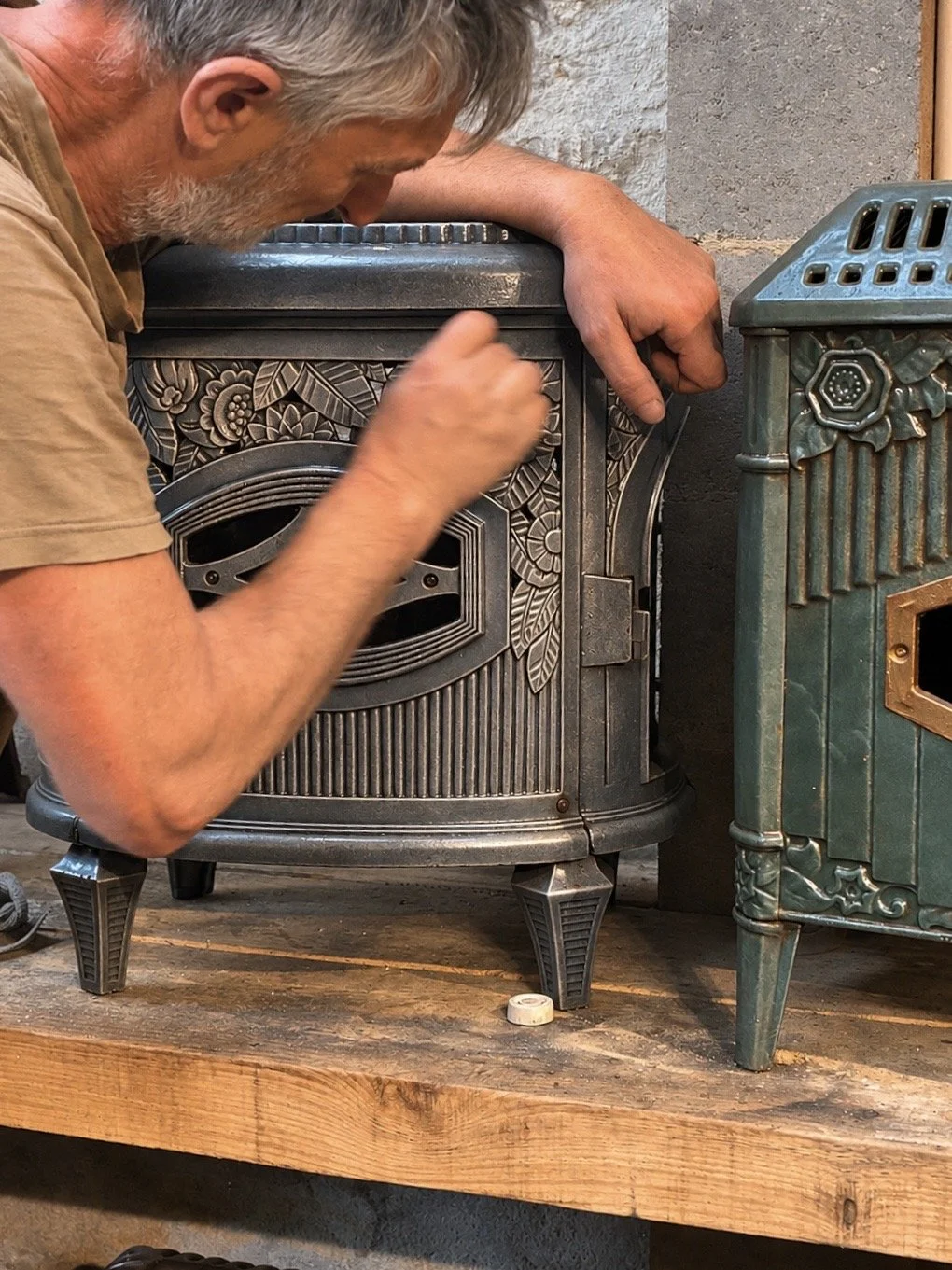
Throughout France, tucked away in forgotten corners, are beautiful antique heating stoves that once occupied a place of pride in family homes. Elaborate cast-iron details, richly colored enamel, delicate floral motifs, and an unmistakable sense of old-world elegance made these objects far more than practical sources of warmth.
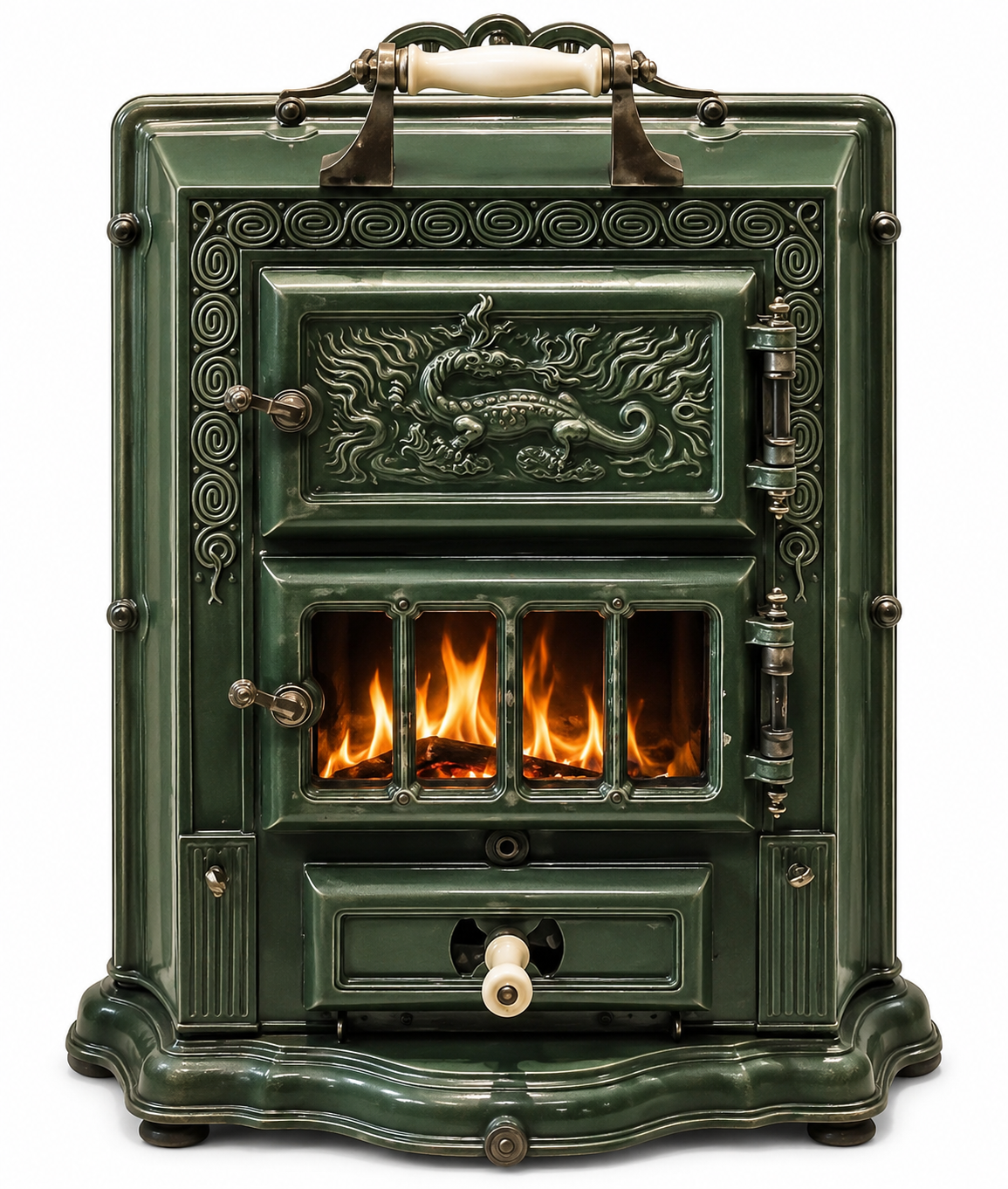
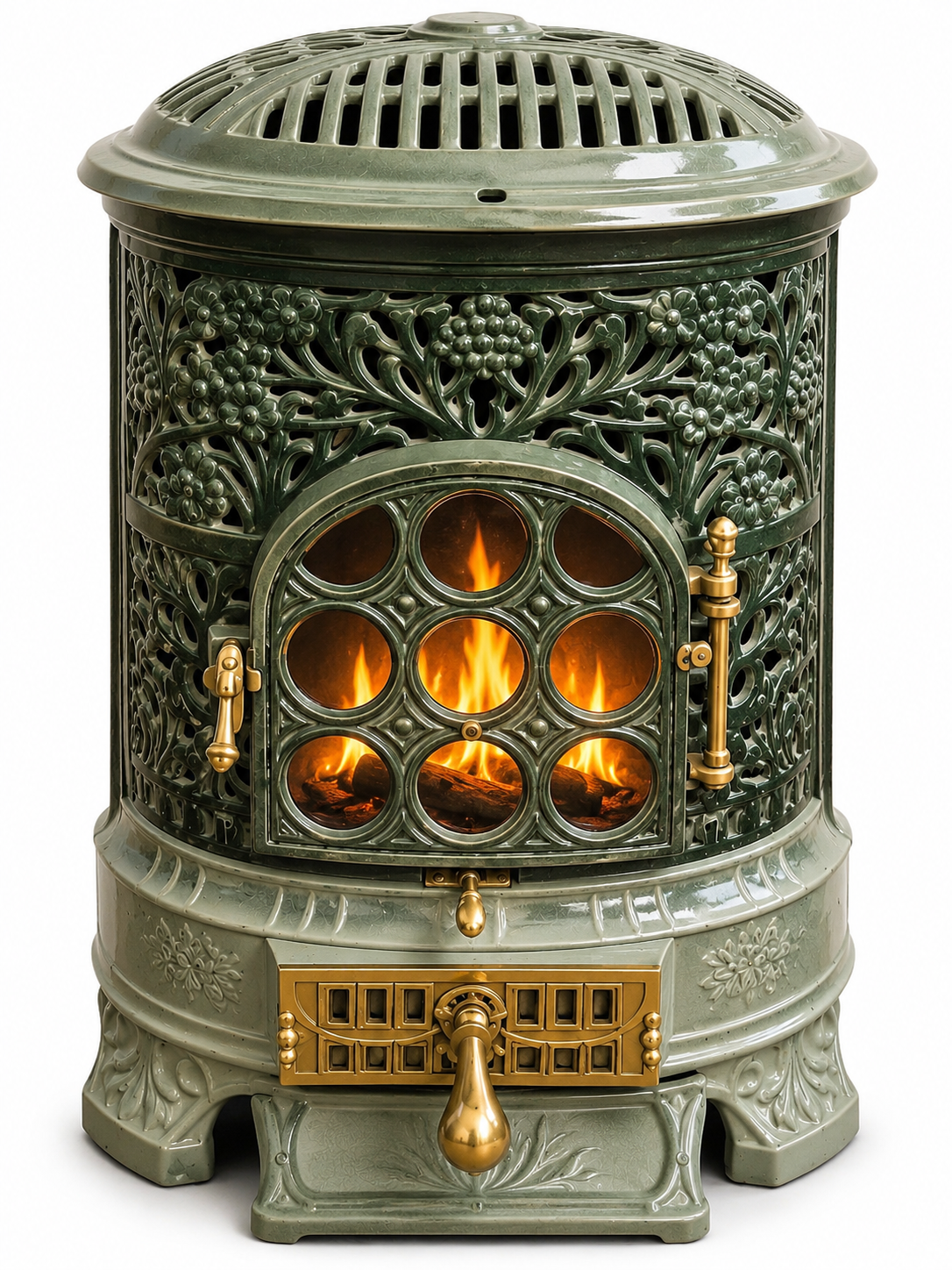
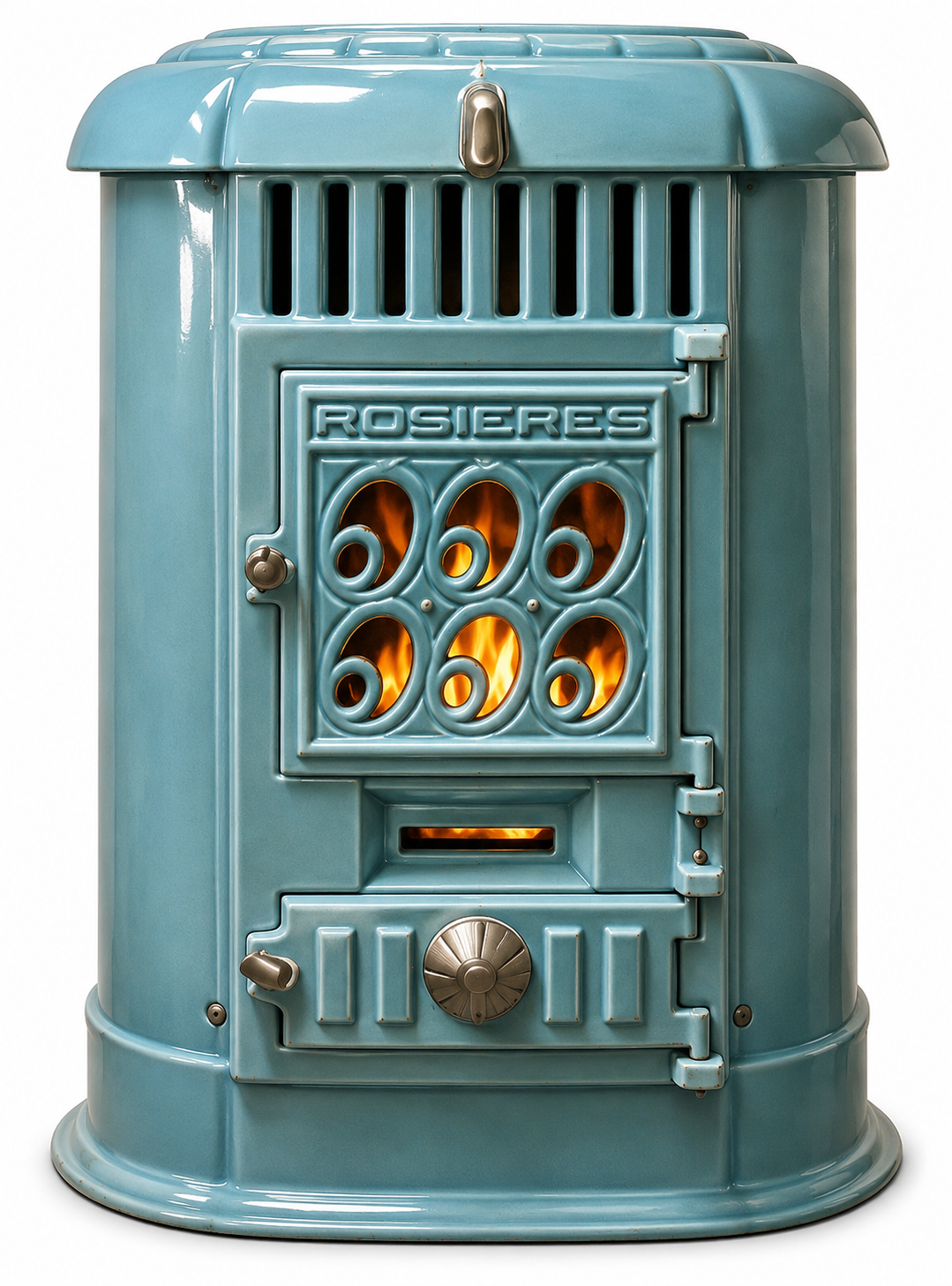
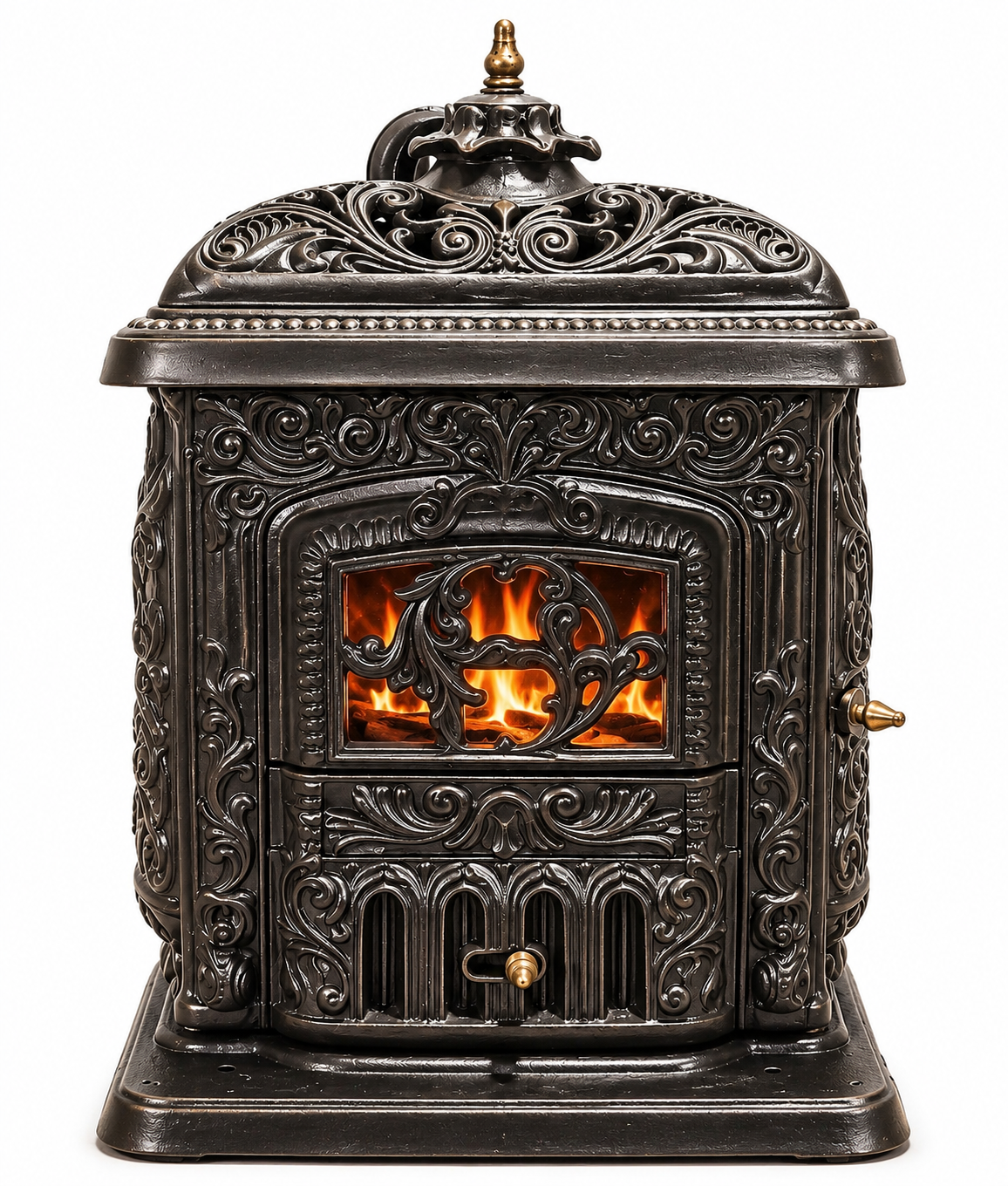
Today, many have been replaced by modern heating systems, leaving behind a remarkable collection of decorative history waiting to be rediscovered.
Fortunately, someone has been paying attention.
Flamantique, an independent French business established in 2024 with a rather charming ambition: to rescue antique French stoves, restore their original beauty, and find a way for them to be enjoyed in modern homes.
But as with so many interesting businesses, the story begins long before the company itself…
A Love Affair with French Antiques

Louise's fascination with antique stoves began in childhood. Growing up in an international family, with an Australian mother and a British father, Louise spent much of those early years in the Bordeaux region of France. Surrounded by French architecture and decorative traditions, Louise developed a particular affection for the elaborate shapes, magnificent colors, and ornamental details of antique heating stoves. Approximately twenty years ago, that affection became a collection. Not with the intention of opening a business, mind you. Louise simply found them beautiful. And beautiful they certainly were.
During the nineteenth and early twentieth centuries, French manufacturers produced an extraordinary variety of decorative cast-iron stoves. Some were adorned with Art Nouveau flowers and flowing botanical designs, while others featured geometric patterns, sculptural details, and elaborate metalwork.
For someone with an artist's eye, the attraction was understandable. Before Flamantique, Louise worked as a watercolor illustrator for books. Looking back, the transition from painting delicate illustrations to restoring the intricate enamel finishes of antique stoves seems an especially fitting progression.
Two Artisans, One Workshop, and a Rather Wonderful Collection
There is no factory production line behind Flamantique.
Instead, Louise and Philippe work from their French workshop, sourcing individual antique stoves and carefully restoring them by hand. Their search takes them throughout France, where they discover pieces that might otherwise be forgotten, discarded, or left to deteriorate. Each stove is selected for its character, craftsmanship, and restoration potential.
Philippe handles the engineering required to adapt the antique structures for bioethanol burners, while Louise brings an artistic sensibility to the restoration of their beautiful finishes. The result is a collection of individual antiques, each carrying its own history. No two pieces are quite alike.
And perhaps that is precisely the point.
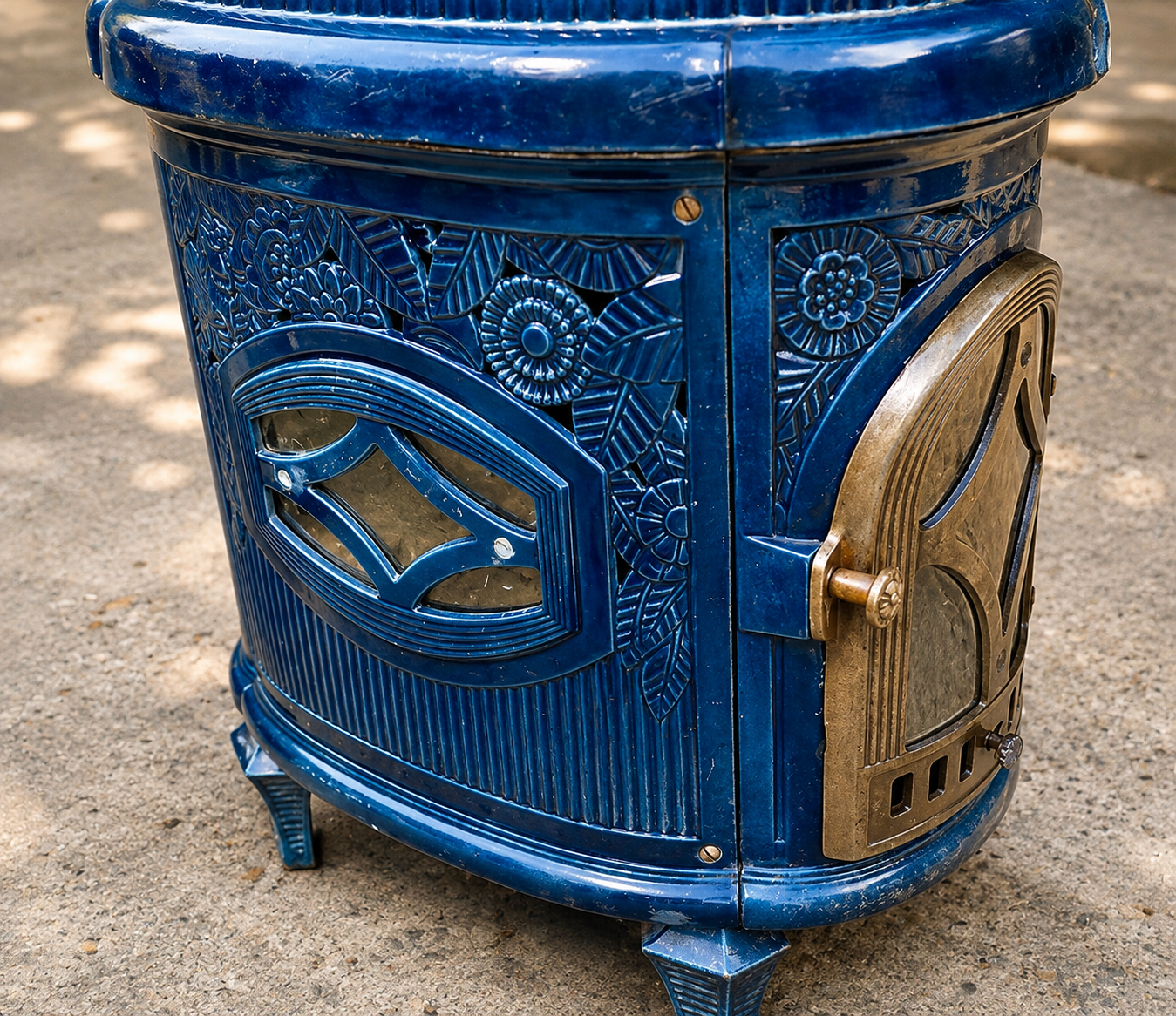
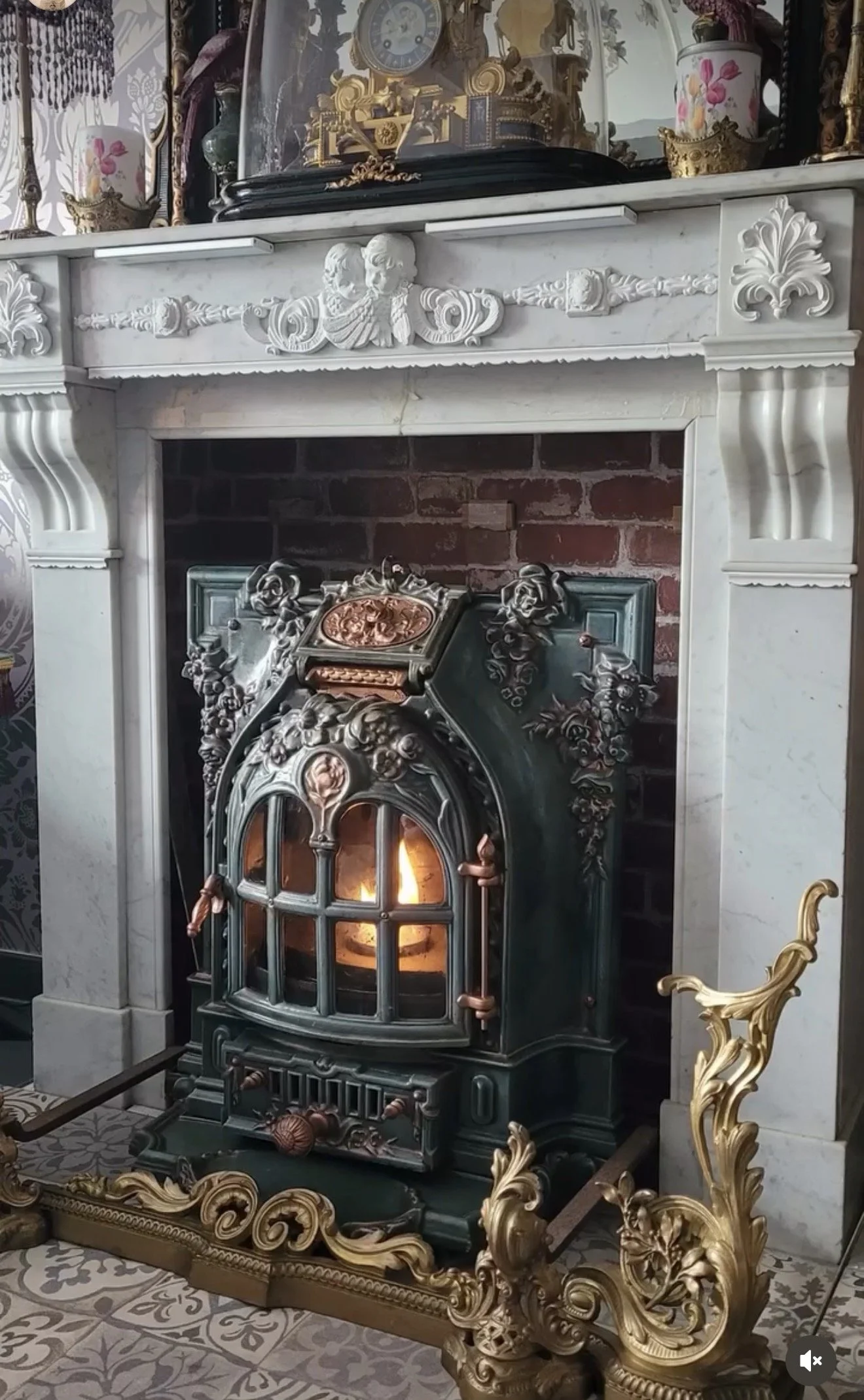
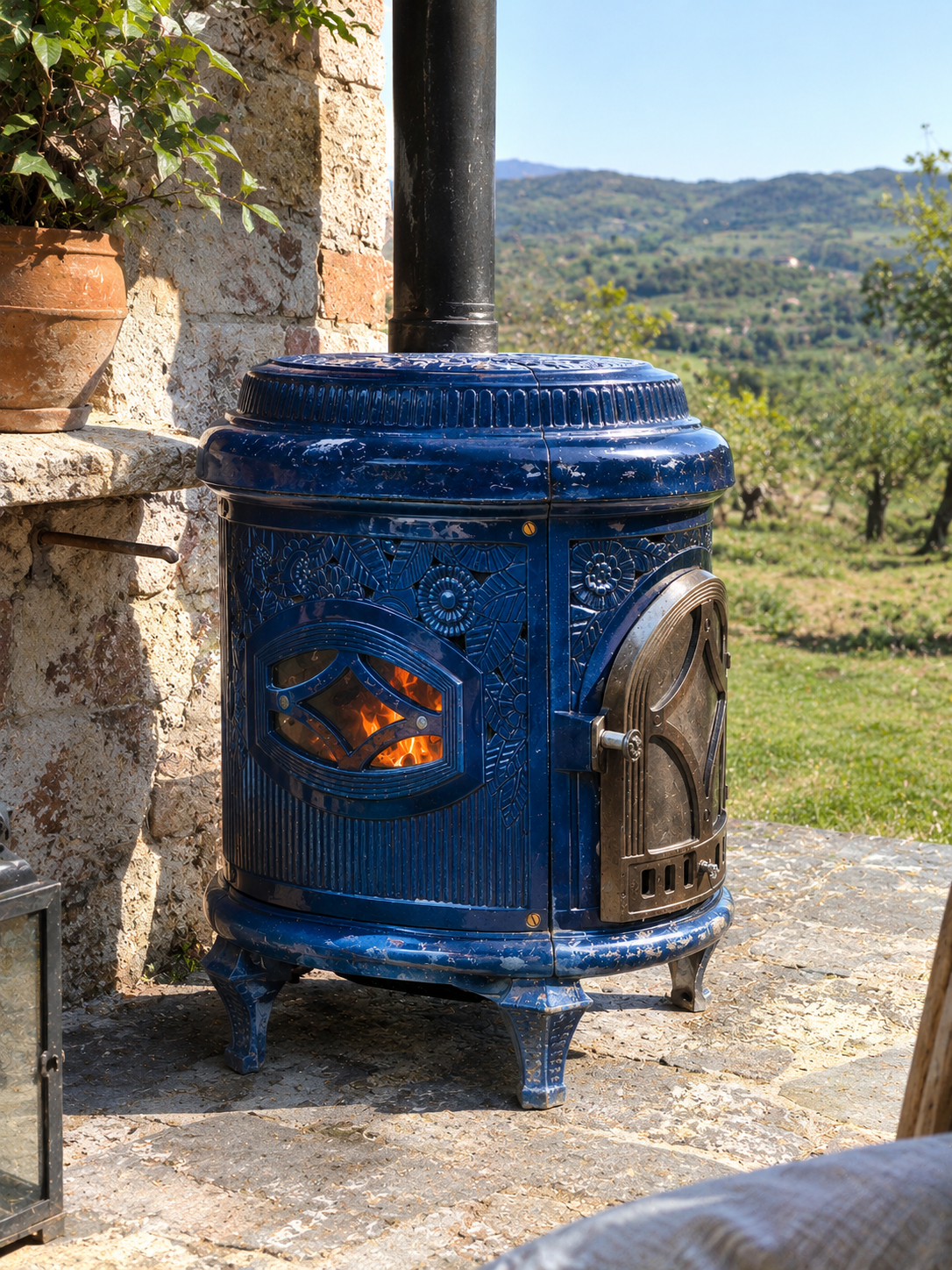
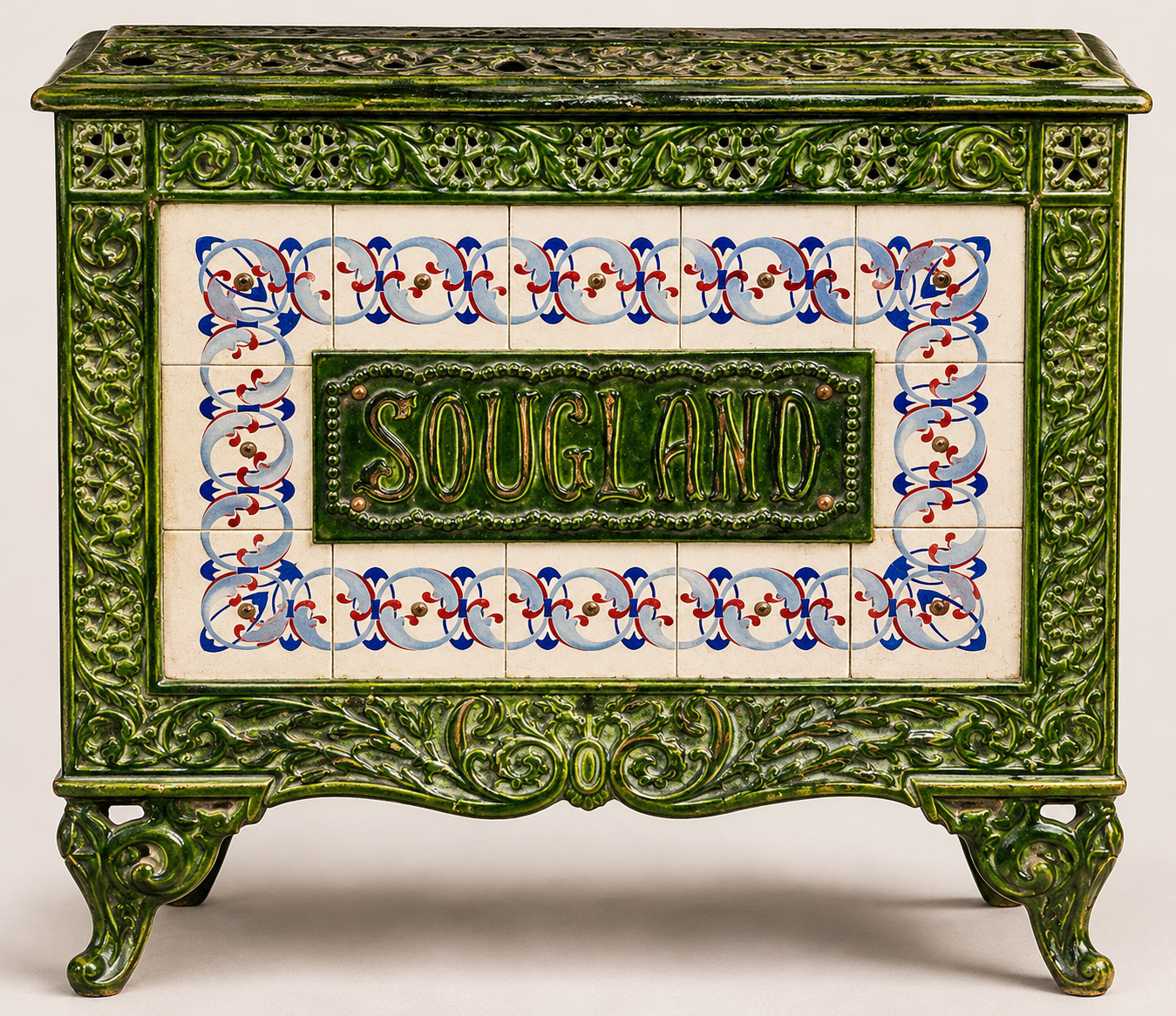
In a world increasingly filled with identical furnishings and mass-produced interiors, there is something rather refreshing about an object that has already spent a century becoming itself.
The Romance of a Real Flame
Of course, there is another element to these restorations that makes Flamantique particularly interesting.
The stoves are intended to do more than simply look beautiful.
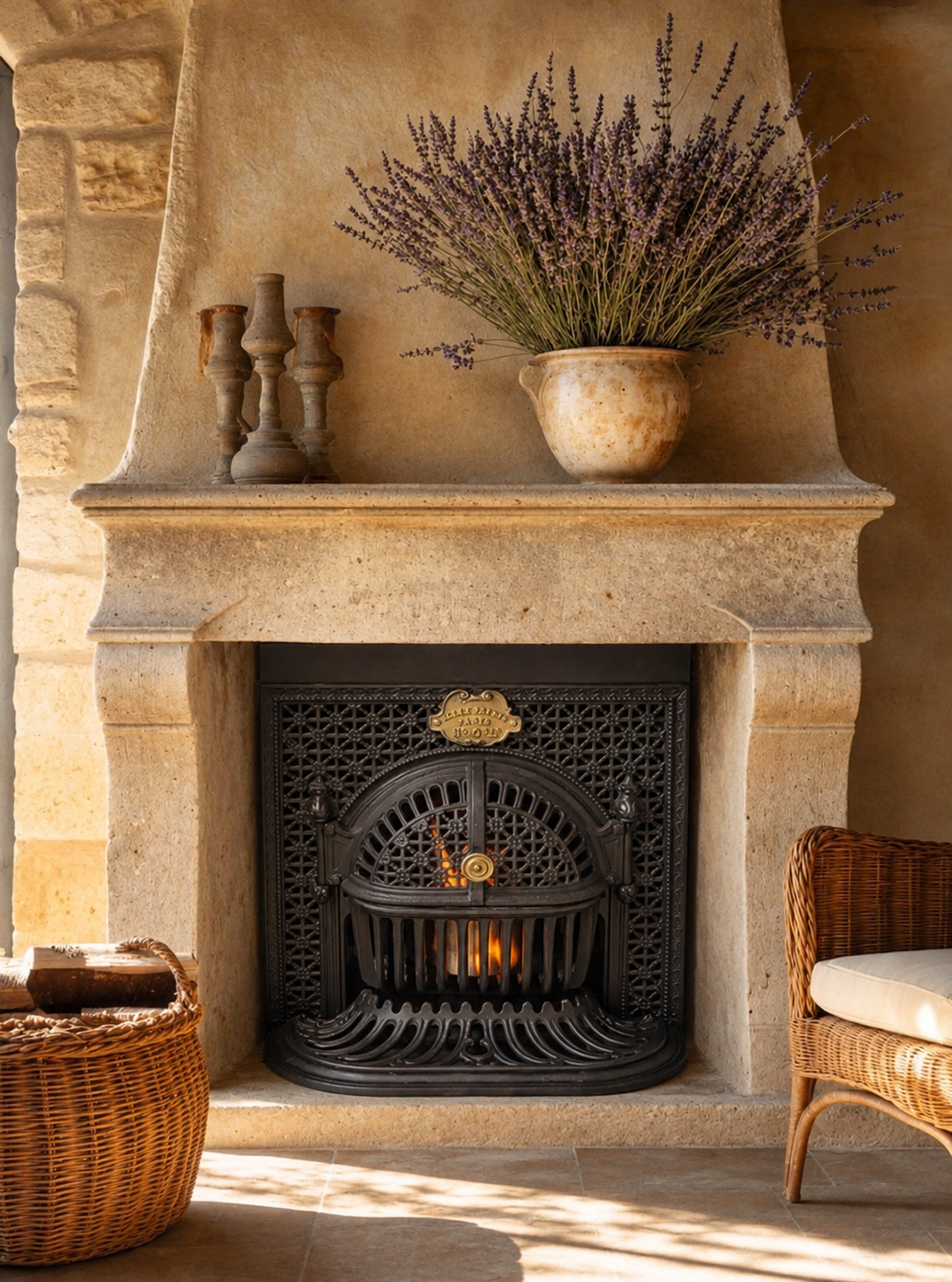
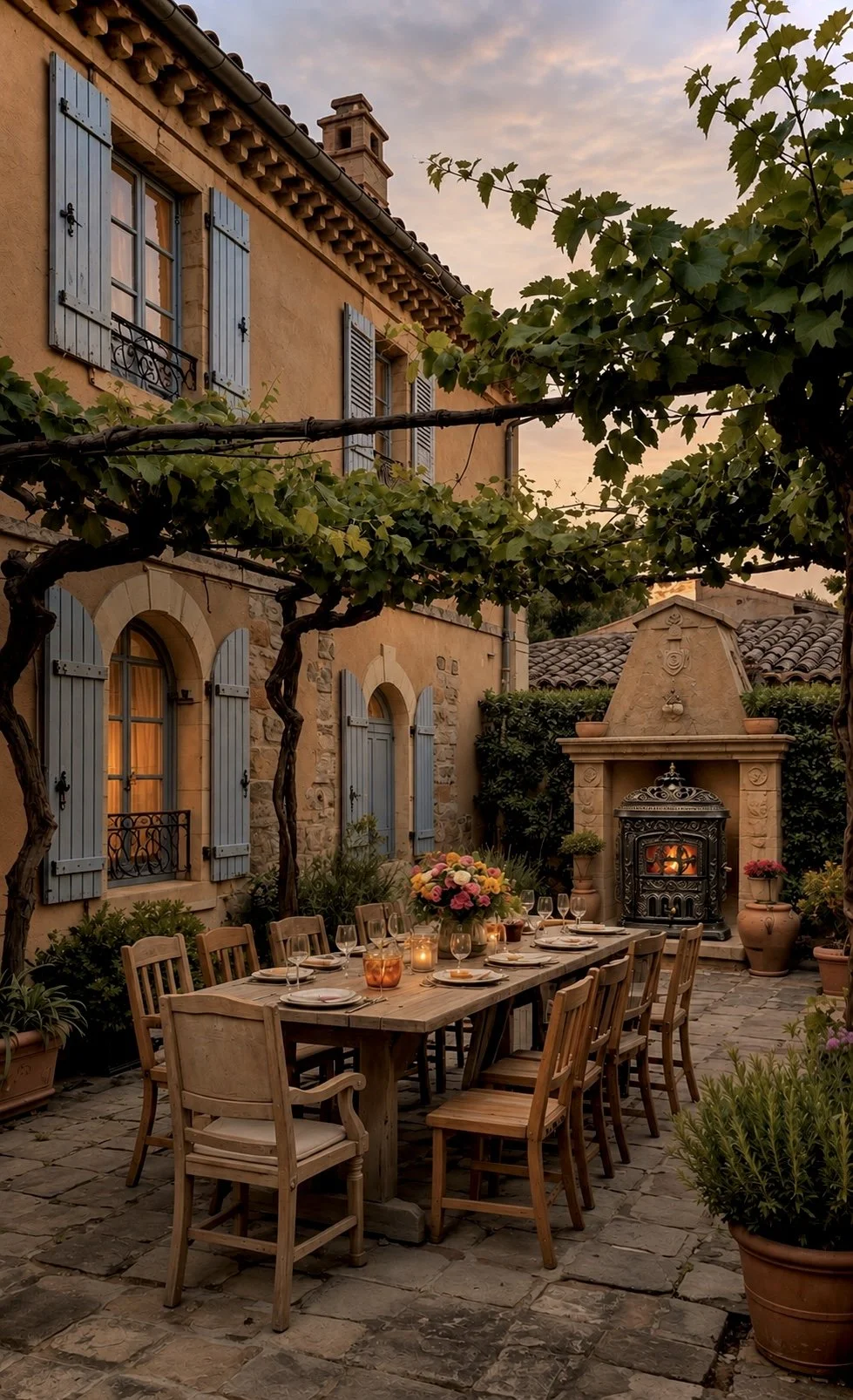
By incorporating bioethanol burners, Louise and Philippe have found a way to introduce genuine flames into their restored antiques without requiring a traditional wood-burning chimney or flue.
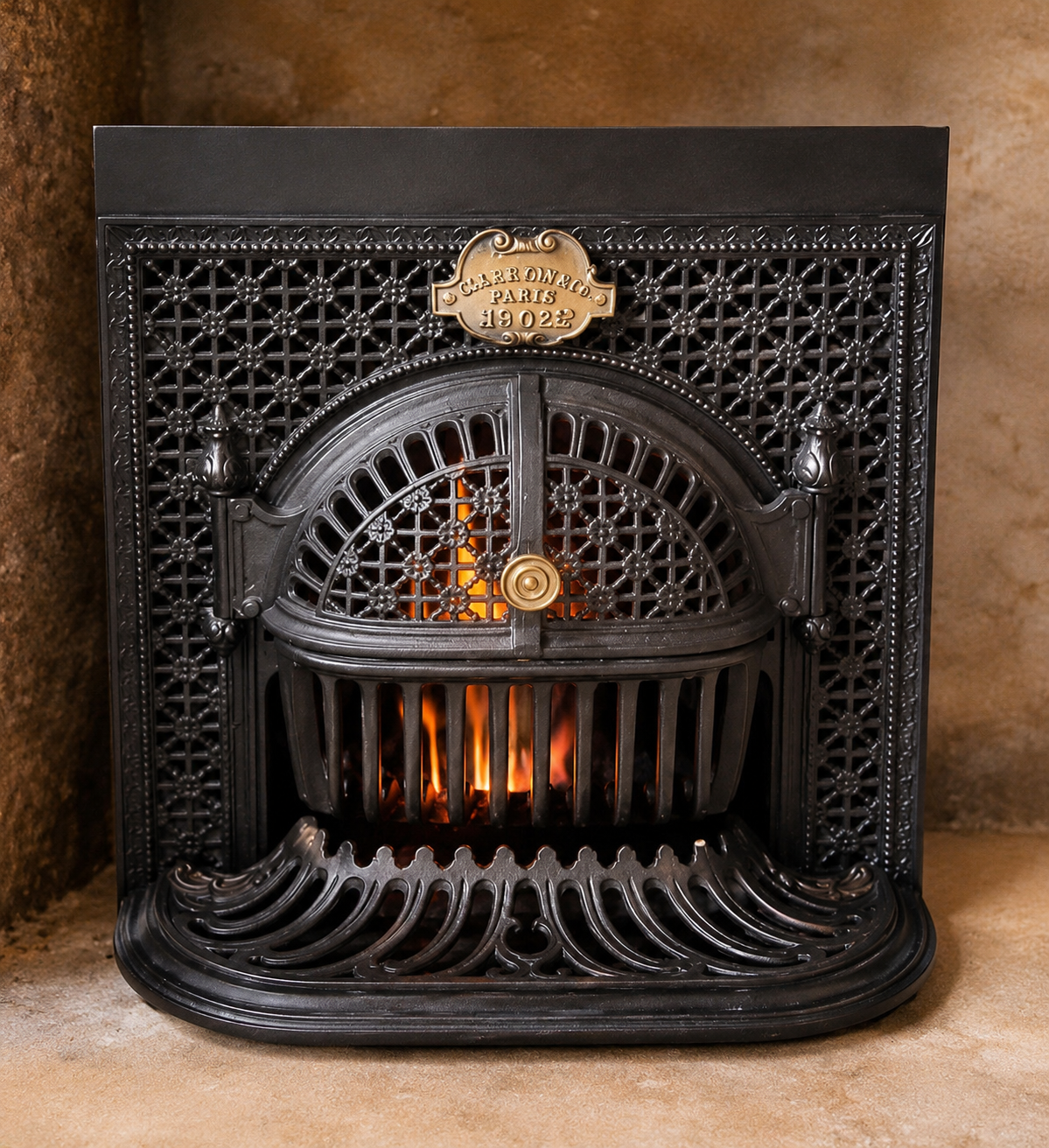
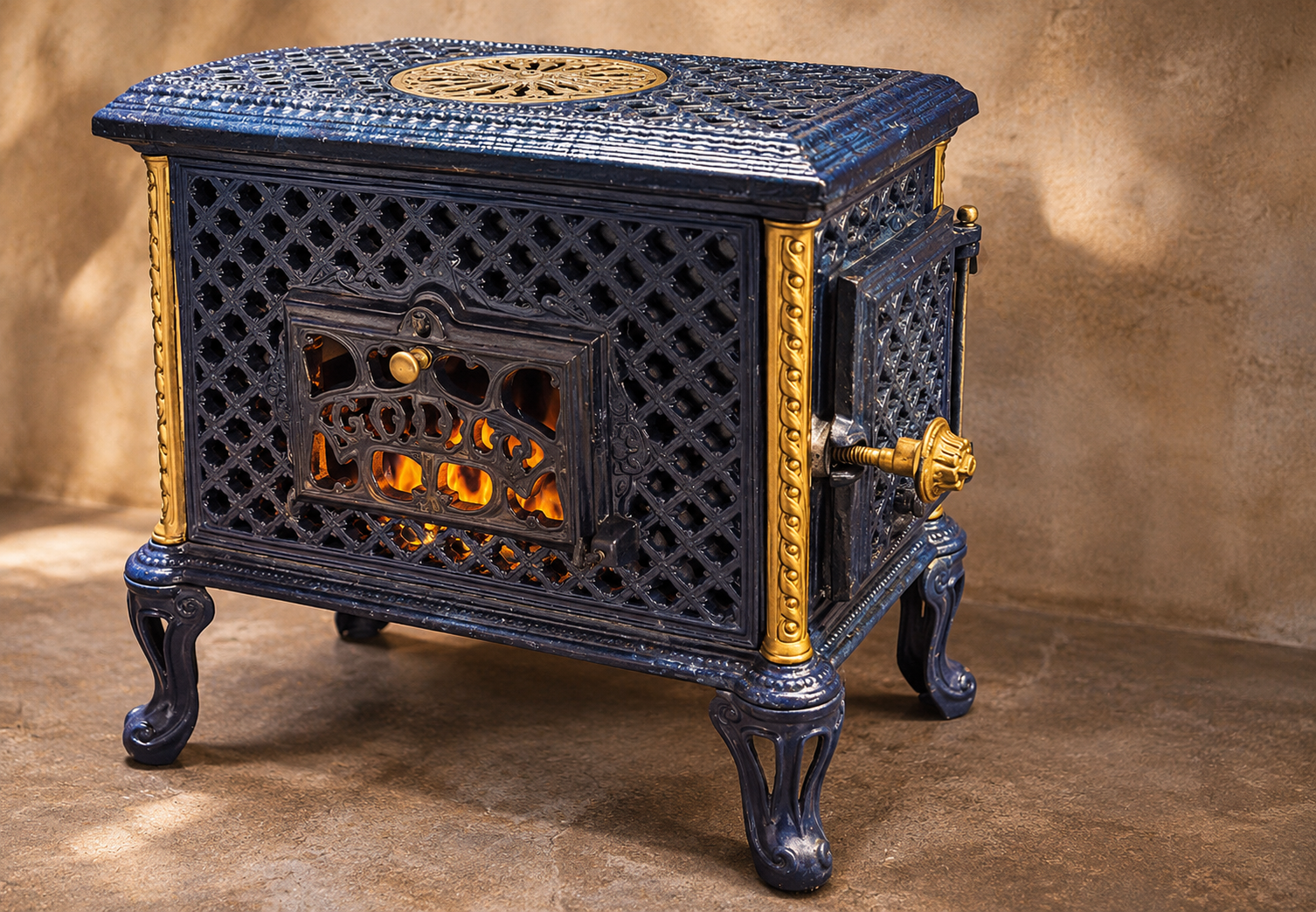
Bioethanol is an alcohol-based fuel, commonly produced from plant-derived materials. When used in a suitable burner, it produces a real flame without the logs and ash associated with wood-burning appliances.
For homeowners who appreciate the appearance of a historic fireplace but lack an existing chimney, the concept opens up interesting decorative possibilities.
Can I Order One?
Absolutely! Although Flamantique operates from a small workshop in the French countryside, Louise and Philippe work with customers internationally. Shipping options are available to several destinations, including the United Kingdom, Italy, Spain, Ireland, and Canada.
Each antique stove is one of a kind, and the couple helps customers obtain clear shipping quotations before purchasing. Insured international transport is available through specialist carriers, with guidance from Flamantique throughout the process.
For availability, pricing, and delivery inquiries, visit www.Flamantique.com or contact Louise directly at Louisemayfranklin@gmail.com.